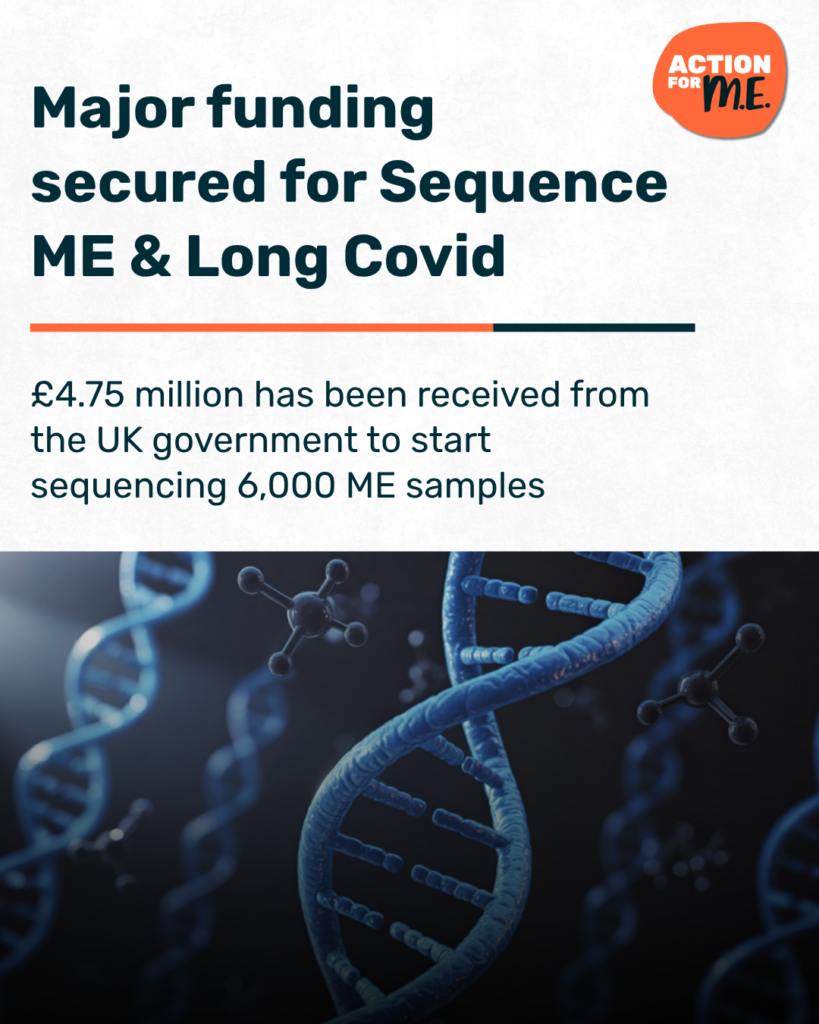
We are thrilled to announce that our landmark research study, Sequence ME & Long Covid, has received major funding (£4.75m) from the UK government, signalling a transformative step toward uncovering the biological roots of ME/CFS and Long Covid.
We have secured this funding as a partnership, and it will go directly to the University of Edinburgh and distributed to relevant partners to fund the sequencing work.
*Note: we were not given the opportunity to input into the DHSC's press release regarding the funding announcement. Further details of the study and its next steps can be found in our project FAQs section on this page.
“We are delighted to receive this investment in Sequence ME & Long Covid to enable us to start sequencing DNA samples. This project builds on DecodeME and creates even greater value from the samples provided by people with ME/CFS.
However, there is more to do, and this must be only a start to the significant investment in ME/CFS research that is so desperately needed to bring funding to the levels seen in other illness areas. ME/CFS research has been neglected for decades; research in ME/CFS and overlapping illnesses like Long Covid must become a priority. We are very grateful not only to DHSC but also to our charity partners and donors who have helped make this possible.”
“By deeply sequencing the complete genomes of 6,000 DecodeME participants using advanced DNA sequencing technology, this project will allow us to pinpoint individual genes disrupted in ME/CFS, moving beyond broader chromosomal signals identified to date. Crucially, it offers the potential to uncover patterns of familial inheritance and to break down this complex disease into its underlying biological causes – bringing us closer to more precise diagnosis and, ultimately, targeted treatments.”
“Large-scale data analysis allows us to move beyond individual symptoms and start uncovering the underlying biology of ME/CSF and Long Covid. This initiative provides an important opportunity to generate the kind of robust, high-quality data needed to support meaningful scientific discovery.”
“We are proud to be working closely with Action for ME and the University of Edinburgh to help elucidate genomic causes of ME, CFS and Long Covid, and in doing so start to bring answers to so many families affected by these chronic disease.
“While a UK study, there is global appetite for this first of a kind dataset, especially when we consider that 6 out of 100 people who have Covid showed Long Covid symptoms (WHO) (1)”
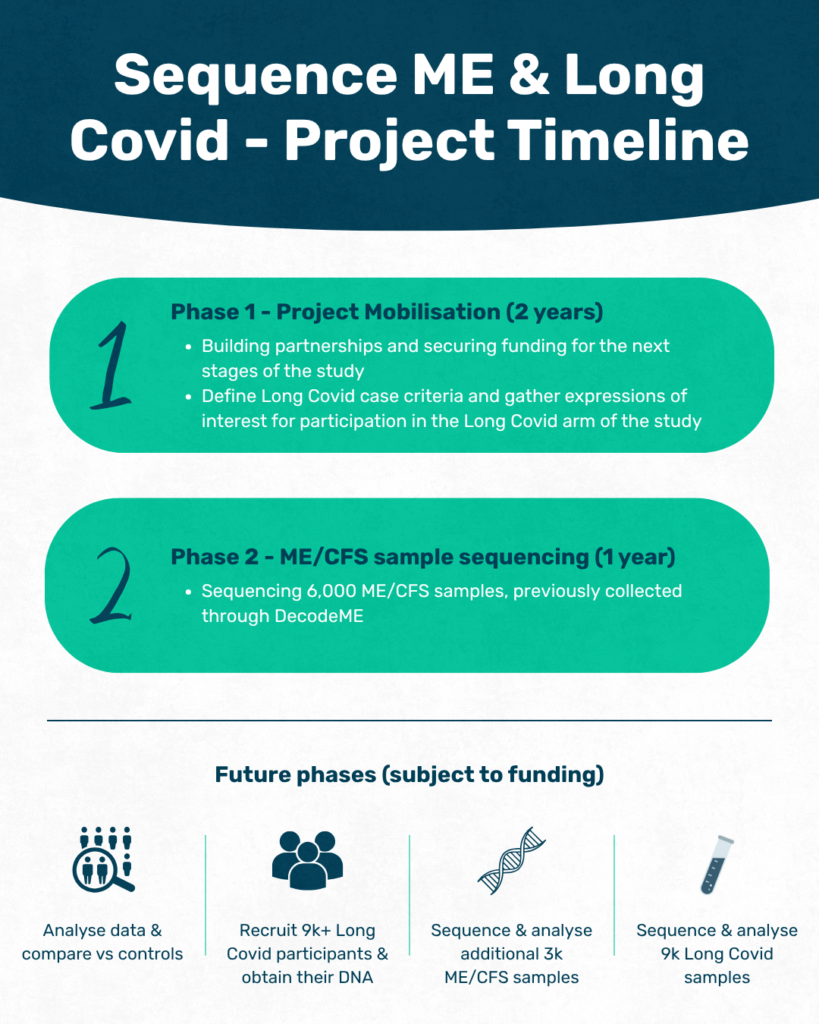
This investment is a step towards delivering the world's largest, comprehensive, whole-genome sequencing dataset. Led by DecodeME's Manager Group, and building on the success of the first DecodeME study, this project will analyse the entire genetic code of 9,000 people with ME/CFS and then 9,000 people with Long Covid. Using cutting edge Oxford Nanopore sequencing technology, it aims to identify additional genetic causes (rare and structural genetic variants) that could finally reveal the biological mechanisms driving these debilitating conditions.
ME/CFS and Long Covid affect millions of people across the world. Despite their profound impact, research into their biological causes has been historically underfunded.
There are still no diagnostic tests and no effective treatments. By identifying genetic variants linked to these conditions, we hope to accelerate the development of targeted diagnostics and life-changing treatments.
A world-class collaboration
Sequence ME & Long Covid brings together leading experts from:
This multidisciplinary team combines global expertise in genomics, bioinformatics, co-production, and ME/CFS and Long Covid, whilst ensuring that people with lived experience remain at the heart of the project.
Previously announced funding from the Schmidt Initiative for Long Covid (SILC), Complex Disorders Alliance (CODA), the Solve ME/CFS Initiative, Action for ME, and generous contributions from the public have supported phase 1 of the Sequence ME & Long Covid study. This funding is already helping us to:
This new funding from OLS will support phase 2 of the study, which includes the sequencing of 6,000 ME/CFS samples, previously collected through DecodeME, using Oxford Nanopore’s leading genetic technology.
This phase has also been made possible by a generous donation of £174,414 from WE&ME, which plays a vital role in supporting the team responsible for generating the sequencing data.
This is a major milestone and a moment of real hope.
We’ll continue to share updates as the study progresses. Thank you to everyone whose DNA samples, support, and lived experience make this work possible.